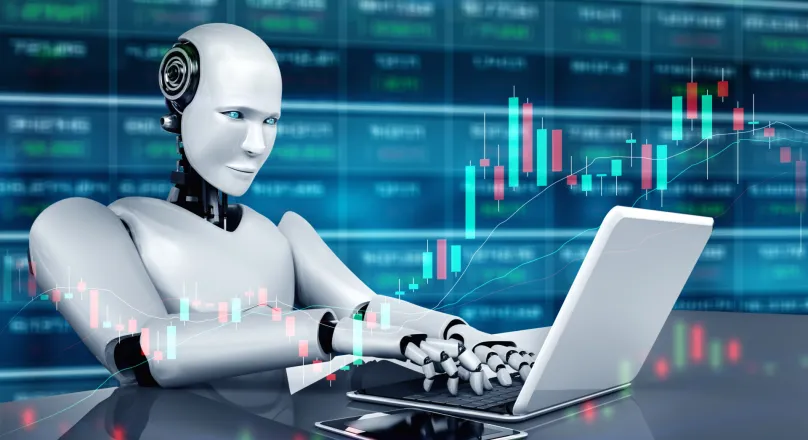
AI Stock Trading Platforms are transforming how individuals and institutions approach investing, blending machine learning, big data, and automation to analyze markets at speeds no human trader could ever match. What once required teams of analysts and hours of research can now be processed in seconds through advanced algorithms.
The financial markets have always rewarded speed and insight. Today, artificial intelligence delivers both. Retail investors, hedge funds, and brokerage firms are integrating AI-driven tools into their trading workflows to improve precision and reduce emotional bias.
This shift is not just technological; it represents a fundamental change in how trading decisions are made and executed.
The Rise of AI Stock Trading Platforms in Modern Finance
Financial markets generate enormous volumes of data every second. Stock prices, economic indicators, corporate earnings reports, social media sentiment, and geopolitical developments all influence asset prices.
Traditional trading models struggled to process this scale of information efficiently. That’s where AI Stock Trading Platforms step in. These systems leverage machine learning algorithms to identify patterns, predict trends, and automate trades based on predefined strategies.
Major financial institutions have embraced AI as a competitive advantage. Companies like JPMorgan Chase and Goldman Sachs invest heavily in artificial intelligence research to enhance trading accuracy and risk management.
The result is a more data-driven trading environment where decisions are increasingly guided by algorithms rather than intuition.
How AI Stock Trading Platforms Actually Work
At the core of AI Stock Trading Platforms are machine learning models trained on historical and real-time market data. These models analyze price movements, trading volumes, volatility patterns, and macroeconomic signals.
Natural language processing tools scan news articles, earnings transcripts, and social media posts to gauge sentiment. For example, an algorithm might detect negative sentiment around a company announcement before the market reacts.
Platforms often integrate with brokerages like Robinhood or Interactive Brokers, enabling automated trade execution once conditions are met.
By combining predictive analytics with real-time execution, AI systems aim to optimize entry and exit points.
Why Investors Are Turning to AI-Driven Trading
Human traders are susceptible to emotional biases. Fear and greed can lead to impulsive decisions.
AI systems operate based on predefined logic and data analysis, reducing emotional interference. This objectivity appeals to both novice investors and experienced professionals.
Speed is another advantage. Markets move rapidly, and opportunities can disappear within seconds. AI algorithms execute trades almost instantly, minimizing slippage.
For many users, AI Stock Trading Platforms provide a sense of structure and discipline in volatile markets.
Real-Life Example: From Manual Trading to AI Automation
Consider a mid-career investor who spent years manually analyzing charts after work. Despite effort and research, his returns remained inconsistent.
He eventually adopted an AI-powered trading platform that used backtested strategies and automated risk controls. Within months, his trading approach became more systematic. He no longer chased sudden price spikes or reacted emotionally to news.
While AI did not guarantee profits, it provided consistency and reduced decision fatigue.
Stories like this highlight how technology can complement human judgment rather than replace it.
Risk Management in AI Stock Trading Platforms
No trading strategy is risk-free. AI systems are only as reliable as the data and models behind them.
Robust platforms incorporate risk management features such as stop-loss triggers, position sizing algorithms, and portfolio diversification analytics.
Backtesting against historical data helps evaluate strategy performance across different market conditions. However, past performance does not guarantee future results.
Investors should understand that AI Stock Trading Platforms enhance analysis but cannot eliminate market uncertainty.
Regulatory Oversight and Compliance
Financial markets operate under strict regulatory frameworks. In the United States, agencies such as the U.S. Securities and Exchange Commission monitor trading activities to prevent manipulation and insider trading.
AI-based systems must comply with transparency and reporting standards. Brokerage platforms offering algorithmic trading tools are required to maintain audit trails and risk disclosures.
In regions like India, regulators have also introduced guidelines governing algorithmic trading to ensure market stability.
Compliance strengthens trust in AI-driven platforms and protects investors.
AI Stock Trading Platforms and Retail Investors
Previously, algorithmic trading was limited to hedge funds and institutional investors.
Today, retail investors have access to user-friendly AI-powered applications that simplify complex analytics. These platforms often provide dashboards displaying predictive indicators and automated portfolio rebalancing.
The democratization of advanced trading tools levels the playing field.
However, accessibility also requires financial literacy. Investors must understand strategy limitations and avoid overreliance on automation.
Machine Learning, Big Data, and Predictive Accuracy
Machine learning models improve over time as they process new data.
Supervised learning techniques analyze historical price patterns to predict future movements. Reinforcement learning adapts strategies based on market feedback.
Big data integration enhances predictive accuracy by incorporating diverse information sources.
Through continuous refinement, AI Stock Trading Platforms evolve alongside changing market dynamics.
Challenges Facing AI Stock Trading Platforms
Despite their advantages, AI trading systems face several challenges.
Market anomalies, unexpected geopolitical events, and black swan occurrences can disrupt algorithmic predictions. Overfitting is another risk, where models perform well on historical data but poorly in live markets.
Cybersecurity also remains a priority. Protecting user data and financial transactions is essential.
Transparency in algorithm design and ethical use of AI strengthen long-term credibility.
Institutional Adoption and Competitive Edge
Institutional investors use AI for high-frequency trading, risk assessment, and portfolio optimization.
Quantitative hedge funds leverage proprietary algorithms to gain microsecond advantages. Speed and efficiency become decisive factors.
Firms integrating AI analytics into research workflows gain deeper insights into asset correlations and market signals.
In competitive financial markets, technological sophistication often translates into strategic advantage.
The Human-AI Collaboration Model
Successful trading does not mean removing humans entirely from the equation.
Experienced traders often combine AI-generated insights with fundamental analysis and macroeconomic understanding.
AI identifies patterns; humans interpret context.
This collaborative approach maximizes strengths while minimizing weaknesses.
Ethical Considerations in AI Trading
As AI adoption grows, ethical considerations become increasingly important.
Market fairness, data privacy, and algorithm transparency are central concerns. Regulators and industry leaders advocate responsible AI deployment.
Clear communication about algorithm limitations builds investor trust.
Maintaining ethical standards ensures sustainable growth in AI-driven finance.
The Future Outlook of AI Stock Trading Platforms
Advancements in artificial intelligence and quantum computing may further enhance predictive capabilities.
Integration with blockchain technologies could improve transaction transparency and security.
Real-time sentiment analysis powered by large language models may refine decision-making processes.
As markets evolve, AI Stock Trading Platforms are expected to become more adaptive, personalized, and accessible to global investors.
The combination of automation, analytics, and regulatory oversight will shape the next phase of digital investing, redefining how traders interact with financial markets in an increasingly data-driven world.
Read also: