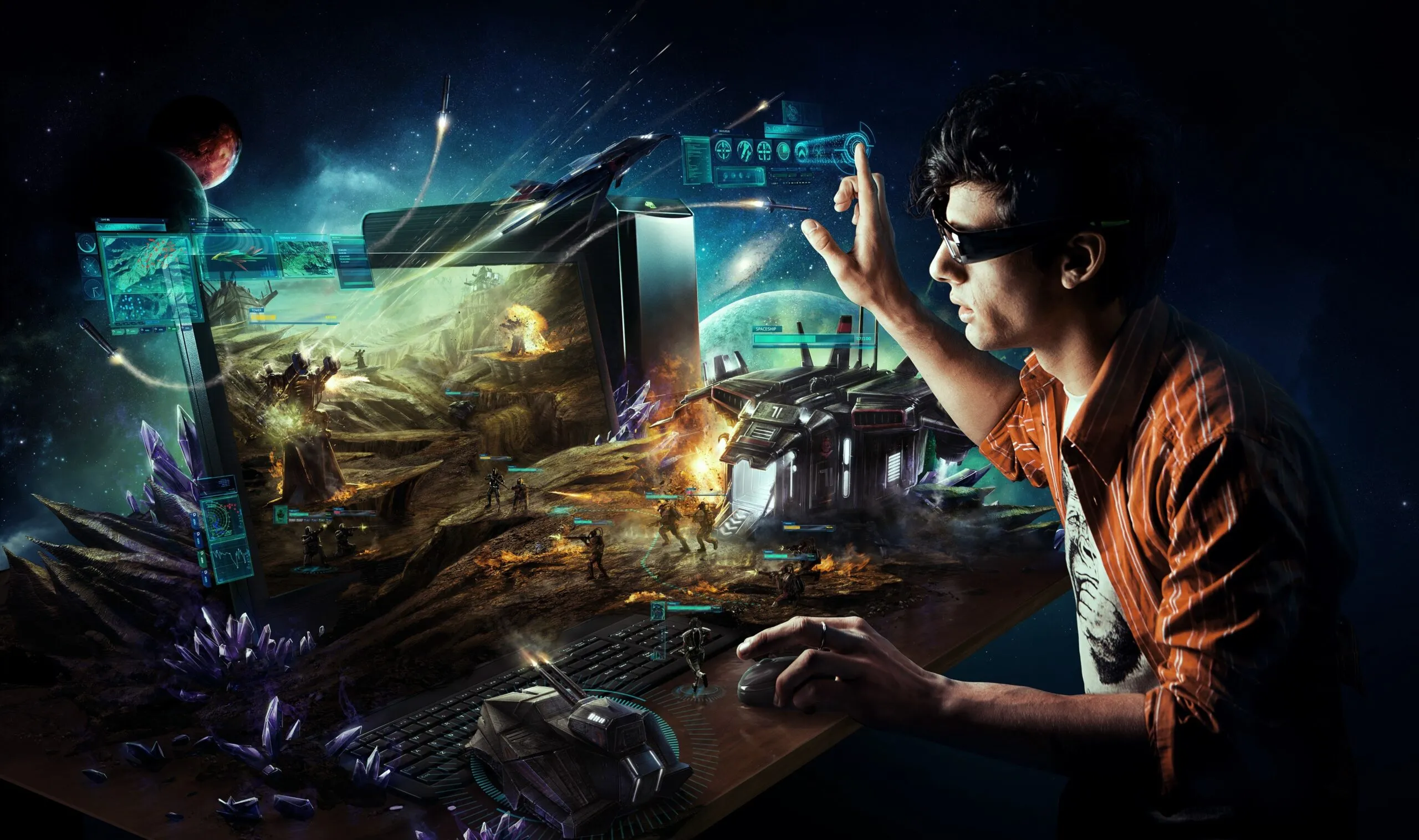
AI-Enhanced Game Physics is no longer a futuristic concept whispered about in developer forums. It is already reshaping how modern games move, collide, break, and respond to player actions. From the way a football curves mid-air to how a virtual building collapses under pressure, game physics has entered a new era where artificial intelligence learns, adapts, and reacts in real time.
For players, this shift feels subtle yet powerful. You may not consciously notice the equations running behind the scenes, but you feel the difference instantly. Characters move with weight. Objects respond naturally. Worlds feel alive rather than scripted. This is where AI steps in, turning predictable physics systems into dynamic, evolving experiences.
Game physics has always aimed to mimic reality, but traditional engines were limited by predefined rules. AI breaks that limitation by observing patterns, learning from interactions, and adjusting behavior on the fly. The result is gameplay that feels less like a simulation and more like a living environment responding uniquely to every decision.
The Evolution of Game Physics Before AI Took Over
In early video games, physics was mostly illusion. Developers relied on simple math formulas to simulate gravity, collisions, and motion. If a character jumped, they followed the same arc every single time. If an object fell, it behaved exactly as expected, regardless of context.
As hardware improved, physics engines like Havok and PhysX brought more realism. Ragdoll animations, destructible environments, and advanced collision detection became common. Still, these systems were rule-based. They followed strict instructions and could not adapt beyond what programmers manually defined.
This predictability became a creative limitation. Players learned to exploit physics quirks, speedrunners mastered glitches, and worlds began to feel mechanical once patterns were recognized. Developers needed a way to make physics feel organic, not repetitive.
That need opened the door for AI-driven approaches that could interpret context, learn from gameplay data, and adjust physics responses dynamically.
How AI Learns to Simulate Reality in Games
At the heart of AI-enhanced systems is machine learning. Instead of relying solely on hard-coded rules, AI models are trained using massive datasets of motion, impact, and interaction. These datasets may include real-world physics data, motion capture recordings, or millions of in-game simulations.
Once trained, the AI can predict how objects should behave in new situations. If a player throws an object at an unusual angle, the AI calculates a response based on learned behavior rather than a fixed formula. This creates outcomes that feel natural, even when they are unpredictable.
Reinforcement learning also plays a role. AI agents simulate thousands of physics interactions during development, learning which outcomes look and feel realistic. Over time, the system improves its understanding of weight, momentum, friction, and resistance.
This learning-based approach allows physics to evolve without constant manual tweaking, saving developers time while improving realism.
AI-Enhanced Game Physics and Real-Time Adaptation
One of the most exciting aspects of AI-Enhanced Game Physics is real-time adaptation. Traditional physics engines treat every object interaction the same way, regardless of player behavior or environmental context. AI changes that completely.
Imagine driving a car in a racing game. With AI-driven physics, the vehicle responds differently depending on your driving style. Aggressive cornering gradually affects tire grip. Repeated collisions deform the chassis in unique ways. Road conditions adapt dynamically based on weather and usage.
In action games, combat becomes less scripted. Enemies react realistically to impacts instead of playing pre-recorded animations. A heavy hit might knock one character off balance while barely affecting another, depending on posture and momentum.
These adaptive systems make gameplay feel personal. No two players experience the exact same physics responses, increasing immersion and replay value.
Destruction and Environmental Interaction Feel Alive
Environmental destruction is where AI truly shines. In older games, destruction followed set patterns. Walls broke along predefined lines. Buildings collapsed in predictable ways. Once you had seen it, the magic faded.
AI-driven physics systems analyze structural integrity in real time. When an explosion occurs, the AI evaluates stress points, material properties, and force direction. The result is destruction that feels chaotic yet believable.
A collapsing bridge might twist differently depending on where the blast hits. Debris interacts with characters and vehicles in unscripted ways. This unpredictability creates cinematic moments that feel earned rather than staged.
Open-world games benefit massively from this approach. Dynamic weather, terrain deformation, and object interactions make worlds feel reactive instead of static backdrops.
Sports Games and the Rise of Authentic Motion
Sports games have embraced AI-driven physics to capture the subtle details fans care about. Ball movement, player collisions, and body mechanics now reflect real-world dynamics more accurately than ever before.
In football or basketball games, AI models analyze professional match data to replicate authentic motion. The way a ball spins, bounces, or deflects off a player’s foot is influenced by real physics data rather than simplified equations.
Player fatigue, balance, and momentum also impact movement. A tired athlete does not accelerate or stop the same way as a fresh one. These details deepen realism and reward skillful play.
For fans, this means matches feel less scripted and more like watching a live broadcast unfold under your control.
The Role of AI in Character Animation Physics
Character animation has traditionally relied on blending animations rather than true physical response. AI-enhanced systems bridge the gap between animation and physics.
Instead of switching between canned animations, AI-driven characters adjust their movement based on physical forces. If a character stumbles, the AI calculates how they regain balance rather than triggering a generic recovery animation.
This approach is especially powerful in VR games, where immersion depends on believable motion. When virtual bodies respond naturally to player input, the sense of presence increases dramatically.
Developers use AI to ensure characters move with appropriate weight and resistance, avoiding the floaty or robotic feel that breaks immersion.
AI-Enhanced Game Physics in Open-World Experiences
Open-world games present unique challenges. With countless interactions happening simultaneously, traditional physics systems struggle to maintain consistency and performance.
AI-Enhanced Game Physics helps by prioritizing meaningful interactions. The AI learns which physics calculations matter most to player experience and allocates resources accordingly. Distant objects may use simplified physics, while nearby interactions receive full simulation detail.
This intelligent scaling allows massive worlds to feel responsive without sacrificing performance. NPCs interact naturally with environments. Wildlife responds realistically to terrain and threats. Vehicles handle differently depending on load, speed, and surface.
The result is a world that feels coherent, alive, and responsive, even at scale.
Performance Optimization Through Intelligent Physics
One common concern about advanced physics systems is performance. AI addresses this by optimizing calculations rather than increasing them blindly.
Machine learning models predict outcomes efficiently, reducing the need for heavy real-time computation. Instead of simulating every micro-interaction, the AI estimates results based on learned patterns.
This approach not only improves frame rates but also allows developers to push realism further without overwhelming hardware. Even mid-range systems benefit from smoother, more consistent gameplay.
As hardware evolves, AI-driven physics scales gracefully, ensuring longevity for modern game engines.
Trust, Expertise, and Real-World Validation
From an EEAT perspective, credibility matters. Leading studios collaborate with physicists, engineers, and AI researchers to ensure accuracy. Many AI models are trained using real-world motion data collected from sensors, cameras, and professional athletes.
Academic research also supports these advancements. Studies in robotics and simulation inform how AI understands physical behavior, bringing scientific validation into entertainment.
Transparency is improving as well. Developers often share technical breakdowns at conferences, explaining how AI-driven physics systems are built and tested. This openness builds trust with both players and industry professionals.
The Emotional Impact of Smarter Physics
Beyond technical achievement, AI-driven physics changes how games make us feel. When environments respond believably, emotional investment increases. A desperate escape feels tense because obstacles behave realistically. A victory feels earned because physics did not cheat or simplify outcomes.
Players form stronger connections to worlds that react logically yet unpredictably. These experiences linger longer, turning good games into unforgettable ones.
As storytelling and physics merge, emotional moments emerge naturally rather than being forced through scripted scenes.
What the Future Holds for Game Physics
The future of game development points toward deeper integration of AI, physics, and player behavior. Systems will continue learning even after release, adapting based on how players interact with the game.
Cloud-based training may allow physics models to improve continuously. Cross-platform data could refine realism across genres, from racing and sports to survival and simulation games.
As AI becomes more accessible, indie developers will also adopt these tools, pushing creativity beyond what was previously possible.
Games will no longer just look real. They will behave real, feel real, and respond intelligently to every player choice.
Why AI-Enhanced Game Physics Matters for the Industry
AI-Enhanced Game Physics represents a shift in philosophy. It moves game design away from rigid systems toward adaptive experiences. Developers gain creative freedom. Players gain immersion. Worlds gain authenticity.
This technology is not about replacing artistry but enhancing it. By handling complex physical behavior, AI frees designers to focus on storytelling, atmosphere, and emotional impact.
As the industry continues to evolve, physics will no longer be an invisible system running in the background. It will become a core storytelling tool, shaping how players experience digital worlds in ways that feel deeply human.
Read also:
wheon gta 5
wheon.com gta vice city
skillmachine .net
skillmachine net login