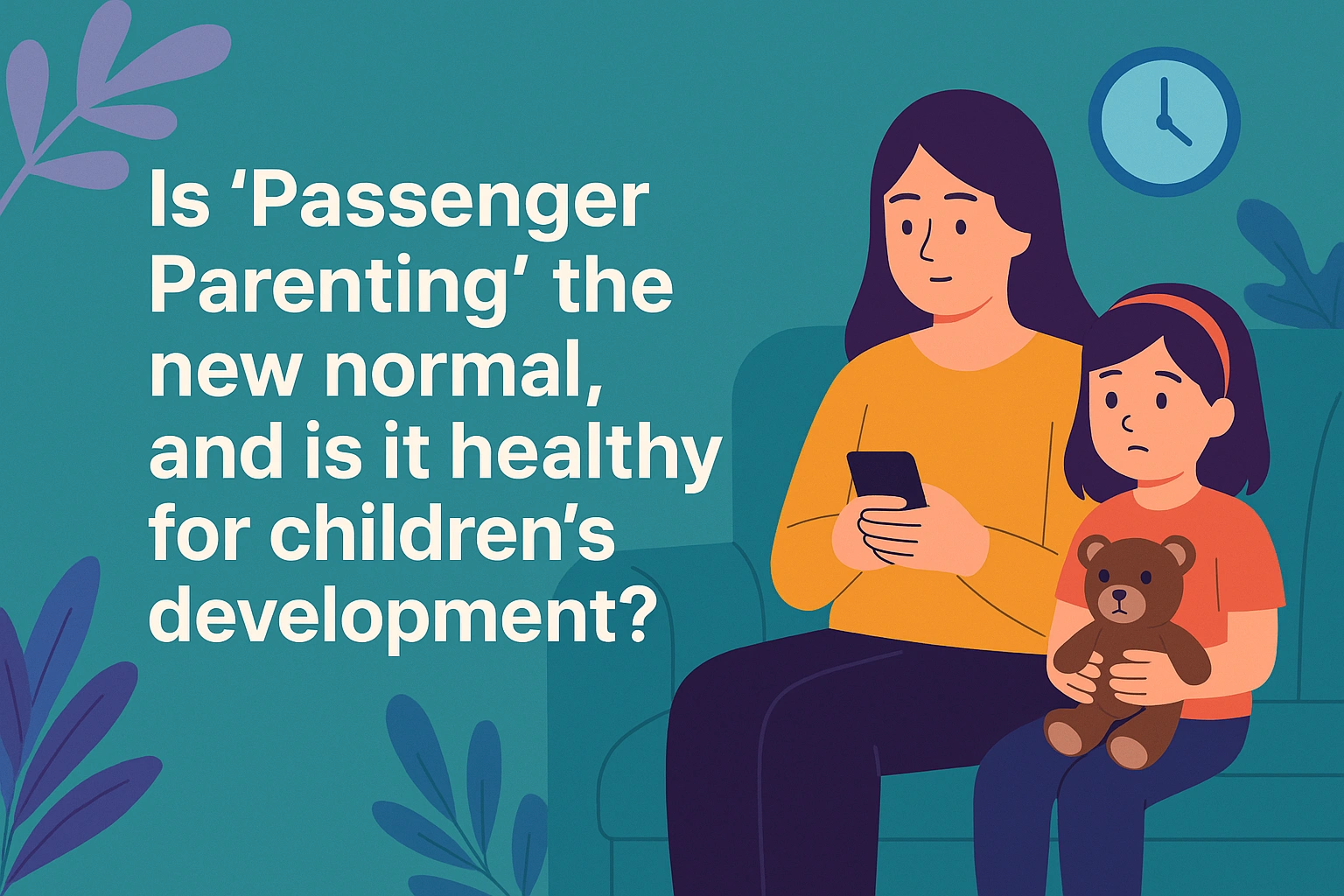
In today’s hyper-connected world, the landscape of parenting is rapidly shifting. Amidst evolving societal norms, career pressures, and digital distractions, a new term is surfacing in parenting circles: Passenger Parenting.
This parenting style is subtly becoming the “new normal” for many modern families. But what exactly is passenger parenting? More importantly, how does it impact children’s emotional, mental, and social development?
Let’s dive deep into the concept, its rise in modern culture, and whether it’s helping or hurting the next generation.
🚗 What Is Passenger Parenting?
Passenger Parenting refers to a passive approach where parents take a backseat in their child’s day-to-day upbringing. Much like a passenger in a car, they’re present—perhaps even watching—but not actively steering or making decisions.
In simple terms, the parent is:
-
Physically available but emotionally distant,
-
Involved, but not engaged,
-
Monitoring, but not mentoring.
This style often contrasts with intentional, proactive, or “driver” parenting, where the parent is consciously leading, setting boundaries, guiding, and actively shaping the child’s experiences.
📈 Why Is Passenger Parenting Becoming Common?
There’s no single cause, but rather a blend of factors driving this trend:
1. Digital Overload
With smartphones, work-from-home setups, and 24/7 notifications, many parents find themselves physically next to their children but mentally elsewhere.
“I’m always with my kids, but I often realize I haven’t heard a word they said in the last five minutes,” shares a working mother of two.
2. Burnout and Mental Health Struggles
Modern parenting comes with enormous pressure. Constant comparisons on social media, academic expectations, financial stress, and the need to “do it all” has left many parents emotionally drained.
3. Shift in Parenting Ideals
The last few decades have seen a move from authoritative parenting to more permissive styles. While autonomy for children is valuable, it sometimes slips into neglectful tendencies disguised as “freedom.”
4. Reliance on External Systems
Parents now outsource much of a child’s development to schools, screens, extracurricular tutors, and even AI. While this support system is useful, it often replaces the direct connection between parent and child.
🧠 What Does Child Development Need?
Before analyzing the effects of passenger parenting, let’s remind ourselves of what healthy child development requires:
-
Emotional security from consistent nurturing
-
Boundaries and discipline that create a sense of safety
-
Active communication that builds trust
-
Time and presence, not just physically but emotionally
-
Role modeling to shape moral and social behavior
Children thrive when they feel seen, heard, guided, and supported. Parenting isn’t just about feeding or educating; it’s about shaping a human being.
🚦Signs of Passenger Parenting
Are you or someone you know slipping into this pattern? Here are a few signs:
-
Constantly distracted by phone or work during family time
-
Minimal involvement in schoolwork, projects, or emotional issues
-
Rarely setting or enforcing boundaries (e.g., screen time, bedtimes)
-
Letting children make all decisions without guidance
-
Replacing bonding time with gadgets or solo play
-
Relying entirely on teachers or nannies for discipline and learning
Passenger parents often have good intentions, but their disengagement—intentional or not—can have long-term consequences.
⚠️ The Impact on Children
1. Emotional Detachment
Children may grow up feeling unseen or emotionally neglected. They might struggle with attachment in future relationships or develop anxiety and low self-esteem.
2. Lack of Discipline and Structure
Without boundaries, children can grow up with poor impulse control, difficulty managing routines, and trouble respecting authority.
3. Reduced Communication Skills
A child who rarely converses meaningfully with parents may lack empathy, social skills, or the ability to express emotions effectively.
4. Overdependence or Hyper-Independence
Some children become overly dependent on external validation (teachers, peers, screens), while others become prematurely independent—sometimes to a fault—learning to suppress emotions or solve problems alone.
5. Academic and Behavioral Issues
Lack of parental engagement often correlates with poor academic performance, attention issues, and disruptive behavior in school settings.
✅ What’s the Alternative? Conscious or ‘Driver’ Parenting
“Driver Parenting” doesn’t mean controlling your child’s every move. It means intentional parenting—being present, aware, and involved.
Here’s how to move from being a “passenger” to a “driver” in your parenting journey:
🕰️ 1. Prioritize Quality Time
Even 15–30 minutes of dedicated, undistracted time daily (playing, talking, reading) creates strong emotional bonds.
💬 2. Open the Communication Door
Ask questions beyond “How was school?” Dig deeper:
-
What made you laugh today?
-
Was there anything that made you sad?
-
What are you most excited about tomorrow?
🧭 3. Set Boundaries with Empathy
Children need limits. Set rules with love, and explain the “why.” Instead of saying “Because I said so,” say “Because sleep helps your brain grow.”
📚 4. Stay Involved in Their Learning
Know what they’re learning at school. Help with homework occasionally. Attend PTA meetings. Celebrate wins and support struggles.
📵 5. Model the Behavior You Want
Put away the phone during meals. Speak respectfully. Handle anger constructively. Children mirror what they see, not what they hear.
Read More: south africa national cricket team vs india national cricket team match scorecard
👨👩👧 Are There Situations Where Passenger Parenting Is Unavoidable?
Yes, and this is important to acknowledge.
-
Single parents juggling multiple jobs
-
Parents with mental health challenges
-
Families dealing with illness or trauma
-
Financial pressures requiring long work hours
In such situations, passenger parenting may be a phase, not a permanent choice. And that’s okay. The key lies in awareness and small efforts to reconnect when possible.
Even micro-interactions like a bedtime story, a shared snack, or a heartfelt compliment can slowly rebuild that emotional bridge.
Read More: rajasthan royals vs punjab kings match scorecard
📱Technology: Friend or Foe?
Tech can both encourage and discourage passenger parenting.
-
Helpful: Apps that help you monitor screen time, shared calendars for family planning, educational games you can play together.
-
Harmful: Excessive screen time for parents or children leading to disconnection.
Create tech rules as a family—like “no phones at dinner” or “1 hour tech-free time before bed.”
🧩 Real-Life Example
Case Study: Sneha & Her Daughter Diya
Sneha, a marketing executive, was working from home after the pandemic. She believed she was spending more time with her 9-year-old daughter, Diya.
But over time, Diya became withdrawn, often choosing to watch YouTube alone rather than play or talk. Sneha realized most of their “together time” was spent in silence—her on calls, Diya on her tablet.
When Sneha consciously introduced “Tech-Free Evenings” and began having daily 20-minute walks with Diya, things started to shift. Diya began opening up, laughing more, and even started journaling her feelings.
This small shift transformed their relationship.
Read More: pakistan national cricket team vs india national cricket team match scorecard
🧠 Expert Opinions
Psychologists emphasize that presence outweighs perfection in parenting.
“Children don’t need a perfect parent. They need an engaged one.” — Dr. Laura Markham, Clinical Psychologist
“Parenting is not about being a helicopter, nor about being a ghost. It’s about being a lighthouse—steady, guiding, and always there when needed.” — Dr. Shefali Tsabary, Conscious Parenting Advocate
🔚 Final Thoughts
Passenger parenting may be becoming the norm in our fast-paced, screen-filled lives—but that doesn’t mean it’s healthy or ideal. The good news? It’s never too late to course-correct.
Children don’t remember every toy or every fancy outing. What they remember is how we made them feel—heard, loved, safe, supported.
Parenting is a journey, and we all fall into the passenger seat sometimes. But the real magic happens when we grab the wheel and drive with intention.
❓FAQs
1. Is passenger parenting the same as neglect?
Not exactly. Neglect is a more severe lack of care and can be considered abuse. Passenger parenting may come from exhaustion or distraction, not malice—but the emotional effects can overlap if not addressed.
2. Can working parents avoid passenger parenting?
Yes. Being busy doesn’t mean being disconnected. Intentional time—even in small doses—can create deep bonds.
3. What if I’ve already been a “passenger” for years?
Start small. A consistent effort to reconnect—conversations, shared activities, tech limits—can rebuild trust and change the dynamic.
Also Visit:
e2pdf call details other number