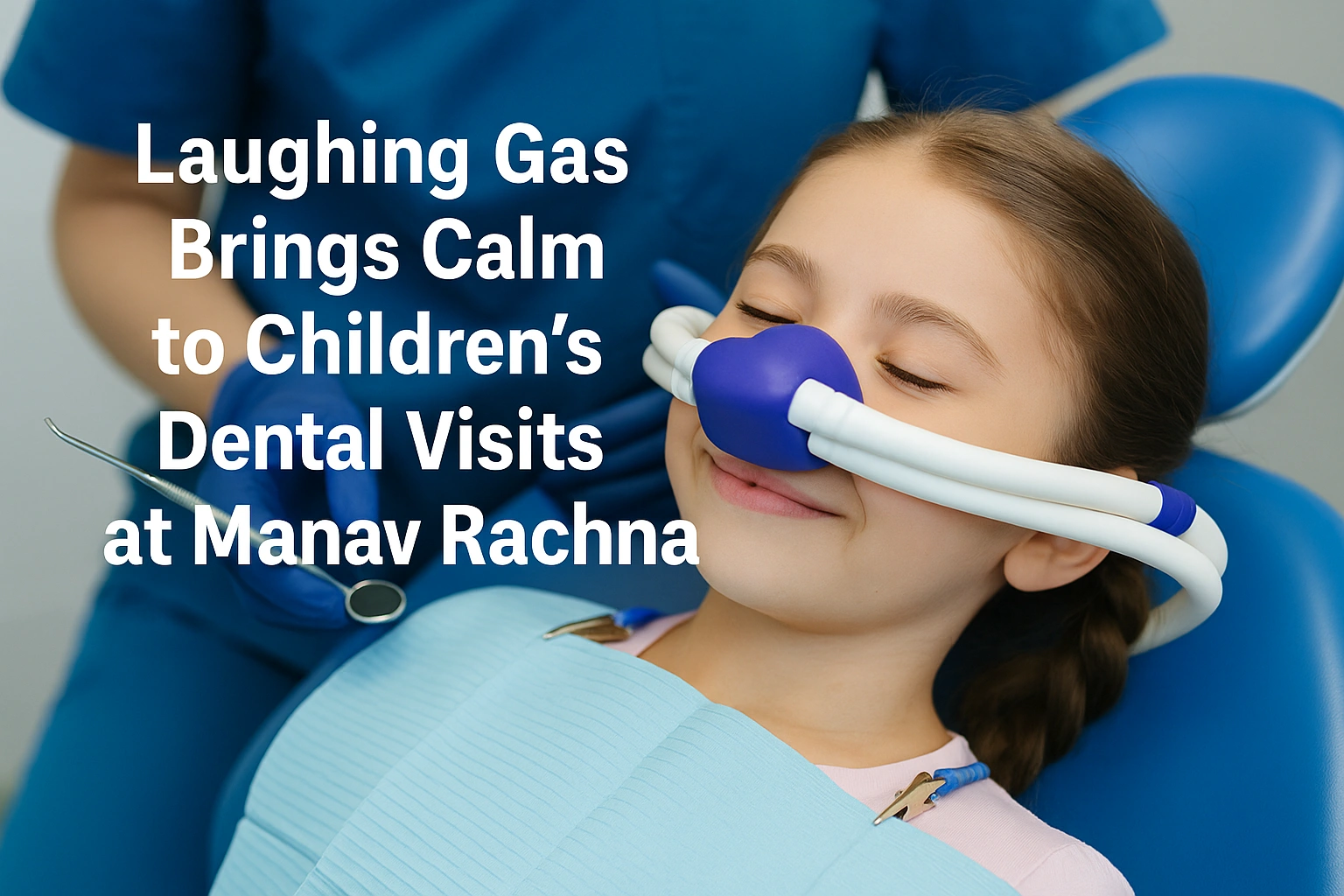
Visiting the dentist can be a nerve-wracking experience for anyone—but for children, it’s often an experience riddled with anxiety, tears, and fear. In an innovative move aimed at making dental care less stressful and more accessible to young patients, Manav Rachna Dental College has introduced the use of laughing gas (Nitrous Oxide) as part of their pediatric dentistry program. This breakthrough approach is already showing promising results in transforming how children perceive dental visits, with parents and doctors alike applauding the positive outcomes.
As more Indian institutions embrace child-centric dental care practices, Manav Rachna’s initiative is setting a benchmark for combining compassion with advanced medical protocols.
🦷 What Is Laughing Gas and Why Is It Used in Dentistry?
Laughing gas, scientifically known as nitrous oxide, is a colorless, odorless gas used to help patients relax during dental procedures. Despite its informal name, it doesn’t make patients laugh uncontrollably. Instead, it creates a mild sedative effect, making children feel light-headed, calm, and slightly euphoric—reducing both pain sensitivity and anxiety.
It has been widely used in countries like the United States, UK, and Australia for decades, especially in pediatric dentistry. However, its integration into Indian dental practice—particularly in educational and community-based institutions like Manav Rachna—is still relatively new.
👩⚕️ Why Children Fear the Dentist
Before delving into how laughing gas helps, it’s important to understand why dental anxiety is so prevalent among children:
-
Fear of pain (especially injections or drilling)
-
Unfamiliar sounds (whirring of tools)
-
Separation from parents in the operatory
-
Negative stories from peers or siblings
-
Past bad experiences
This often leads to avoidance, crying fits, or uncooperative behavior that can make even simple dental procedures nearly impossible.
🏥 The Manav Rachna Approach: Innovation Meets Compassion
Located in Faridabad, Manav Rachna Dental College is part of the Manav Rachna Educational Institutions (MREI), known for its forward-thinking medical and dental programs. Their Pediatric Dentistry Department has always prioritized comfort and safety, but the addition of inhalation sedation through laughing gas marks a transformative step.
Key Highlights of the Program:
-
First-of-its-kind in Haryana region for regular pediatric use
-
Operated by trained pediatric dentists with specialized sedation certification
-
Designed with kid-friendly operatory setups and soothing colors
-
Integration of pre-treatment counseling for parents and children
Dr. Ritu Duggal, Head of Pediatric Dentistry at Manav Rachna, emphasizes:
“We believe that dental visits should not be traumatic. With laughing gas, we’re creating a more positive dental experience that encourages children to return for follow-up care without fear.”
🔬 How It Works: Laughing Gas in Action
The process is non-invasive, and most children tolerate it extremely well.
-
Preparation: The child sits on the dental chair and is explained what the “magic air” will do.
-
Mask Application: A small, flavored mask (often bubblegum or strawberry-scented) is placed over the nose.
-
Gas Inhalation: A precise mix of nitrous oxide and oxygen is released, and within 2–3 minutes, the child begins to feel relaxed.
-
Procedure Performed: Once the child is calm, the dentist performs the dental treatment.
-
Recovery: After stopping the gas, the child breathes 100% oxygen for 3–5 minutes and returns to normal with no side effects.
It’s fast, safe, and doesn’t require hospitalization or IV sedation.
✅ Benefits of Using Laughing Gas for Kids
1. Reduces Anxiety and Fear
Children who were once terrified now feel calm and safe during procedures.
2. Pain Management
Though not a painkiller, nitrous oxide raises the pain threshold, allowing better tolerance during numbing or minor procedures.
3. Faster and Safer Treatment
Less resistance from the child means quicker procedures with reduced risk of complications.
4. No Need for General Anesthesia
This reduces health risks, cost, and recovery time, especially in younger children.
5. Positive Long-Term Impact
Kids associate the dentist with a pleasant experience, making them more likely to maintain oral hygiene into adulthood.
🧒 Real Stories: A Parent’s Perspective
Megha Sharma, mother of a 5-year-old patient, shared:
“My daughter used to scream and cry during every dental visit. But after they used laughing gas, she was calm, even smiling. She called it ‘superhero air.’ I’ve never seen her this relaxed at a clinic before.”
For many parents, this innovation has removed the emotional stress associated with bringing a child to the dentist.
🔍 Safety Measures and Training at Manav Rachna
Safety is non-negotiable, especially when working with children and sedation.
Manav Rachna ensures:
-
Certified sedation protocols in line with Dental Council of India and global standards
-
Monitoring equipment for oxygen saturation, pulse rate, and respiration
-
Parental consent and pre-screening questionnaires
-
Emergency preparedness for allergic reactions (rare)
Their dental staff undergoes regular workshops and simulation training, making them one of the most trusted dental institutions in the Delhi NCR region.
🌍 Why It Matters: A Step Toward Global Pediatric Standards
Manav Rachna’s adoption of laughing gas is a significant shift toward international best practices in pediatric care. In many Western countries, inhalation sedation is standard for kids who need fillings, extractions, or even cleanings.
India, despite having one of the largest child populations in the world, has been slow to adopt such approaches. This initiative shows how education-backed healthcare centers can bridge that gap.
📈 Broader Impact on Pediatric Dentistry in India
The move is already inspiring change across other dental colleges and clinics. Key outcomes could include:
-
Curriculum changes in dental education
-
Demand for specialized pediatric sedation training
-
Policy updates for child sedation safety guidelines
-
Increased parental awareness about modern dental comfort solutions
If scaled across India, this approach could revolutionize children’s dental care and bring millions into routine checkup systems.
💬 Expert Opinion: What Dentists Are Saying
Dr. Ankit Arora, Pediatric Dentist:
“We’ve seen almost 90% compliance from children under nitrous sedation. It has changed the way we plan complex dental procedures.”
Dr. Praveen Bhatia, Anesthesiologist:
“Nitrous oxide is among the safest agents. Its short duration and quick recovery make it ideal for outpatient pediatric use.”
🔮 The Future: What Comes Next?
Manav Rachna plans to:
-
Introduce mobile pediatric dental units with sedation capability
-
Launch community awareness programs in schools
-
Collaborate with insurance providers to cover sedation dentistry for children
Additionally, there are plans to integrate behavioral therapy modules and digital distraction tools (like VR headsets) alongside sedation for even greater comfort.
Read More: giveaway lookwhatmomfound
🌈 Conclusion: A Smile That Stays
Manav Rachna’s implementation of laughing gas in pediatric dental care is not just a medical advancement—it’s a gesture of empathy. By recognizing the emotional and psychological needs of children, the institution has redefined what it means to offer holistic healthcare.
The sounds of drills may still exist, but now, they’re accompanied by giggles, relaxed smiles, and children who look forward to their next dental visit.
In a world where oral health often begins with fear, Manav Rachna is proving that it can begin with calm—and even a little laughter.
❓ FAQs
Q1: Is laughing gas safe for all children?
Yes, it is safe for most children above the age of 3. However, it may not be suitable for kids with certain respiratory or neurological conditions. A pre-treatment evaluation is always conducted.
Q2: Will my child be unconscious during the procedure?
No. Laughing gas causes relaxation but the child stays awake, responsive, and aware of their surroundings.
Q3: How long does it take for the effects to wear off?
The effects typically wear off within 3–5 minutes after the gas is stopped, with no long-term impact.
Read More:
golden state warriors vs houston rockets match player stats