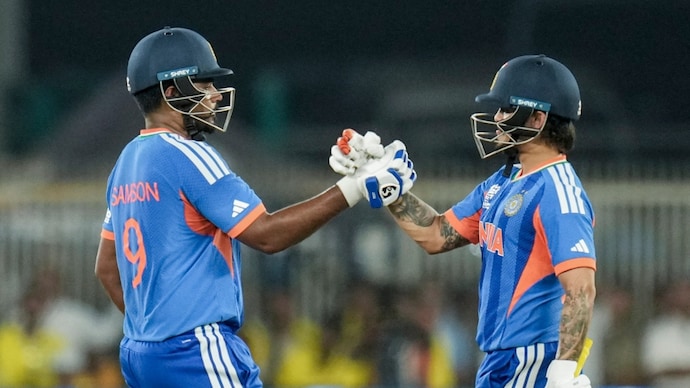
T20 International rankings tell us a compelling story about the shifting balance of power in global cricket. Whether you’re a die‑hard fan tracking your favourite nation or a casual viewer intrigued by the stats and standings, this dynamic leaderboard holds more meaning than just numbers. From the reigning champions to rising challengers, the latest rankings encapsulate how teams have performed across bilateral series, marquee tournaments, and against tough competition.
In this friendly, informative exploration, we dive deep into the T20 International rankings — how they’re calculated, why they matter, and what they reveal about the future of the shortest format of cricket. Let’s explore the latest indicators of global T20 success and what fans should be watching next.
What Are T20 International rankings and How They Work
At the heart of international cricket’s statistical universe, T20 International rankings are a dynamic system maintained by the International Cricket Council (ICC). Unlike a simple win‑loss table, these rankings use a mathematical method to assign numerical ratings to teams based on match outcomes over recent years.
Every T20I match a team plays contributes to its overall rating. Wins against strong opponents in high‑pressure conditions earn more points, while losses or draws reduce the rating proportionally. Ratings are updated frequently, ensuring that current form is reflected accurately.
These rankings serve multiple purposes. They determine seedings for major tournaments like the Men’s T20 World Cup, guide public expectations on team performance, and offer insights to coaches and analysts about strengths and weaknesses. Beyond numbers, they tell stories of resilience, improvement, and sometimes surprise underdog performances that defy popular opinion.
The Current T20 Team Hierarchy
When we look at the most recent T20 International rankings for men’s teams, there’s a familiar picture of dominance and competition. India stands proudly at the top of the table, boasting the highest rating in the world — a testament to their consistent winning performances across series and ICC events.
Hot on India’s heels are England and Australia, both featuring formidable lineups and depth in batting and bowling. New Zealand and South Africa round out the top five, showcasing how teams with strong all‑round balance consistently stay competitive on the global stage.
Below the elite tier, countries such as Pakistan, West Indies, Sri Lanka, Bangladesh, and Afghanistan battle hard for positioning, each vying to break into higher rankings. These nations bring passion and flair to every match they play, often producing memorable contests that defy their ranking positions.
Why does this matter? Because T20 International rankings don’t just show who’s winning — they reflect deeper trends. Teams that rise in rankings generally demonstrate strong bench strength, strategic adaptability, and a culture of consistent performance. That’s why coaches and captains pay close attention to these standings.
Why the Rankings Are More Than Just Numbers
Imagine you’re a fan waiting for a T20I series between two teams ranked close together. The tension isn’t just about win or lose — it’s about potential movement in the T20 International rankings. For players, every run scored or wicket taken influences not only that match but also the mathematical reputation of their entire team.
Consider a team like Afghanistan. They might be ranked ninth or tenth, but their ability to topple higher‑ranked sides in some series tells a story of rapid growth and competitive spirit. That’s exactly what the rankings try to capture — not just past glory, but present performance.
Furthermore, for associate nations and lower‑ranked teams, climbing the ladder represents opportunity. Higher rankings can secure more bilateral series, stronger sponsorship deals, and greater visibility on the world stage. This trickle‑down effect means that T20 International rankings can influence the future direction of cricket development in many countries.
How Major Tournaments Impact Rankings
Major events such as the ICC Men’s T20 World Cup have a significant impact on T20 International rankings. Teams that perform well in these high‑stakes tournaments often see notable improvements in their ratings, while underperformers might slide down the table.
This impact is not just about wins and losses. The weighting system of the rankings values victories against strong opponents. So a surprise win by a lower‑ranked team against a top‑tier side often yields a dramatic shift in their ranking momentum.
For individual players, this tournament pressure can also affect the player‑specific rankings, which, while separate, contribute to the overall prestige and performance indicators of teams. Teams with top‑ranked bowlers and batsmen tend to have better chances of climbing in the T20 International rankings.
Behind the Scenes: The ICC’s Ranking Formula
Many fans see the rankings list but don’t always understand how it’s devised. The ICC uses a comprehensive points‑based algorithm. Each match result contributes to a team’s rating, but recent matches have more influence than older ones.
This ensures that the rankings remain relevant and reflective of current capabilities. For example, a team that dominated two years ago but hasn’t played much recently won’t enjoy an inflated position indefinitely. Likewise, a team that performs exceptionally in a series of current matches can quickly rise in the standings.
In addition to results, the formula takes into account the relative strength of opponents. Beating a top‑five ranked team yields more points than defeating a lower‑ranked side. This emphasizes competitive balance and ensures the T20 International rankings reward performance quality as much as frequency.
Real Stories from the Rankings
Some of the most exciting narratives in recent years have come from teams and players defying expectations. For instance, players from traditionally lower‑ranked teams have delivered match‑winning performances against cricketing giants — and those moments often shift ranking dynamics significantly.
Take the case of Zimbabwe’s Sikandar Raza, who has been on the brink of a major T20I milestone, closing in on 3000 runs and inspiring his team in fiercely contested series. Moments like these remind us that rankings aren’t just abstract numbers — they represent lives, careers and national pride on the global stage.
Meanwhile, Indian stars have recently dominated the team and individual standings, with players topping batting and bowling charts in many ICC updates — reflecting how strong domestic structures like the IPL and domestic circuits feed into international success and hence into T20 International rankings.
Women’s T20I Rankings: An Emerging Story
While the focus often lands on the men’s standings, the women’s T20 International rankings tell an equally inspiring story. Players like Smriti Mandhana and Harmanpreet Kaur have made headlines for their positions in the global rankings, showing how women’s T20I cricket is rising in competitiveness and profile.
These rankings highlight not only individual excellence but also how national teams are investing in talent and structure. As women’s cricket continues to grow, their T20 International rankings provide powerful motivation and visibility, encouraging young girls and fans alike to engage with the sport at every level.
What Fans Should Watch Next
For cricket enthusiasts, the T20 International rankings are more than a scoreboard — they’re a storyline. Every series, every match, and every individual performance adds a chapter. As teams prepare for bilateral series, multi‑nation tournaments, and ICC events, fans should keep tabs on how rankings shift, reflecting form, confidence, and momentum.
Whether it’s a fierce rivalry match that could flip a ranking position or an emerging player taking the world by storm, there’s always something intriguing happening in these standings. In a sport where margins are mere runs or single wickets, staying updated with the T20 International rankings enhances your appreciation of cricket’s competitive spirit and its global pulse.
Read also:
england cricket team vs australian men’s cricket team match scorecard
south africa national cricket team vs pakistan national cricket team timeline
pakistan national cricket team vs zimbabwe national cricket team match scorecard
punjab kings vs mumbai indians timeline
new zealand national cricket team vs australian men’s cricket team match scorecard