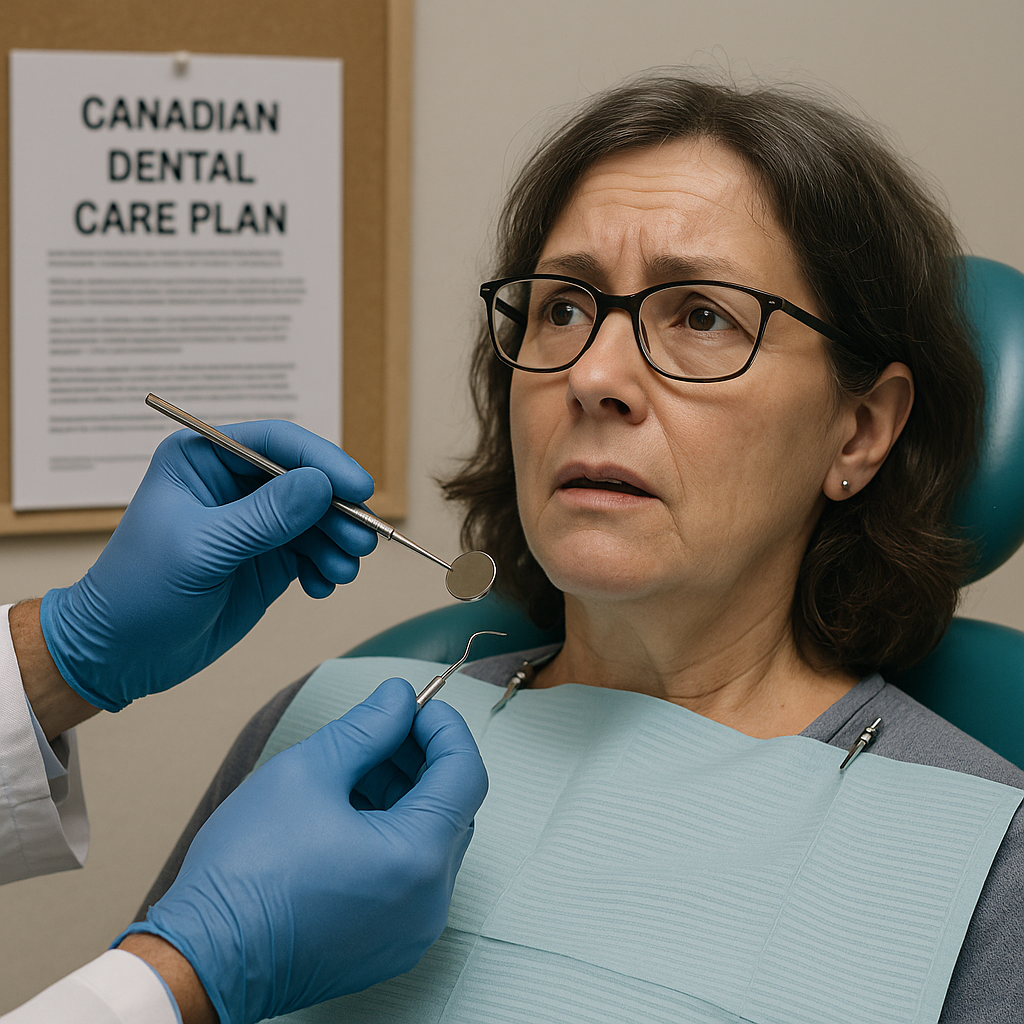
Canada’s long-awaited Dental Care Plan was introduced with the promise of reducing inequality and expanding access to oral healthcare for millions. Touted as a landmark step toward universal dental care, the plan—spearheaded by the federal government—is meant to serve lower-income Canadians without private insurance. But just months into its implementation, both dentists and patients are voicing growing frustration over gaps in coverage, reimbursement rates, and bureaucratic delays that are causing confusion, financial strain, and care disruptions.
The Ambitious Promise of Universal Dental Care
The Canadian Dental Care Plan (CDCP) was unveiled in 2023 as part of a broader agreement between the Liberal government and the New Democratic Party (NDP). Its first phases targeted seniors, children, and people with disabilities, with a longer-term goal of making dental services accessible to all lower-income Canadians by 2025.
At its heart, the plan is meant to cover preventive care, diagnostics, restorations, and surgery—services many Canadians previously had to pay out-of-pocket for or forego entirely. With dental problems increasingly linked to chronic health conditions such as diabetes and heart disease, the government pitched the CDCP as an investment in both public health and economic equity.
Prime Minister Justin Trudeau described it as “a transformative step for our health care system.”
Reality Check: Dentists Struggle With the Details
Despite noble intentions, the rollout has not been smooth. Dentists across Canada are sounding the alarm over several key concerns:
🔹 Low Reimbursement Rates
Dentists say the federal reimbursement fee guide is well below provincial averages, leaving them to either absorb the difference or bill patients for uncovered costs. For example, while a standard cleaning might cost $150 under a provincial guide, CDCP may only cover $100, leaving a $50 gap.
“It’s not financially sustainable,” says Dr. Amrita Patel, a practicing dentist in Toronto. “We want to treat patients, but we’re not a charity. Many clinics simply can’t afford to participate.”
🔹 Administrative Burden
Many clinics are reporting cumbersome paperwork, confusing billing codes, and inconsistent communication from the government. Some dentists have had to hire additional staff just to navigate CDCP claims, adding to overhead costs.
🔹 Lack of Clarity on Coverage
Both patients and dentists are frustrated by the lack of transparency regarding what procedures are covered and which are considered optional or cosmetic. This creates confusion at the point of care and often leads to surprise bills for patients.
Patients Caught in the Middle
While the plan was designed to help patients, many are finding themselves under-informed and under-supported. Stories are emerging of patients who thought their cleanings or fillings were fully covered, only to walk out of clinics with unexpected invoices.
“I was thrilled when I qualified,” says Susan Michel, a 68-year-old retiree in Calgary. “But then I had a toothache, got treated, and was shocked to owe $300. I thought this was supposed to be free.”
Others report having to travel long distances to find participating providers, particularly in rural areas where fewer dentists are opting into the plan due to low reimbursement rates.
Who Qualifies—And What’s Actually Covered?
As of mid-2025, eligibility for the CDCP is based on household income thresholds and lack of private insurance. Coverage levels vary:
-
Households under $70,000/year receive full coverage (100%)
-
$70,000–$89,999/year receive partial coverage (60%–40%)
-
Above $90,000/year are ineligible
Covered services include:
-
Exams and cleanings
-
X-rays
-
Fluoride treatment
-
Fillings and extractions
-
Root canals (limited)
-
Dentures (partial coverage)
However, orthodontics, cosmetic procedures (like teeth whitening), and some specialist referrals are not included, which has caused further confusion among patients expecting broader support.
Dental Associations Demand Reform
Professional dental associations from coast to coast are urging the government to revise the reimbursement model and streamline administrative processes. The Canadian Dental Association (CDA) has issued multiple public statements calling for consultation and collaboration.
“Dentists support universal care in principle,” said CDA President Dr. Heather Carr. “But the program needs structural reform to be viable for providers and effective for patients.”
Some provinces, like Quebec and Alberta, are also lobbying the federal government for greater autonomy in administration, citing mismatches between national policy and local fee structures.
Political Fallout and Public Perception
The CDCP has become a political flashpoint, with critics arguing that the federal government rushed its implementation to score points rather than ensuring sustainable delivery.
The Conservative opposition has labeled the program as “half-baked,” while even some NDP officials—original proponents—have acknowledged the need for urgent improvements.
Meanwhile, public sentiment is divided. A recent Angus Reid poll showed:
-
58% of Canadians support the idea of national dental care
-
Only 39% believe the current plan is being implemented effectively
-
62% want better communication from the government about coverage details
The Path Forward: Fix or Fail?
Despite the early setbacks, few dispute the importance of the program’s goals. Access to oral health care has long been a gaping hole in Canada’s healthcare system. But experts say the solution requires more than just good intentions—it demands practical policy, transparent rollout, and meaningful input from providers.
Possible improvements include:
-
Aligning reimbursement with provincial fee guides
-
Simplifying claim submission platforms
-
Clearer communication campaigns to educate the public
-
Incentives for dentists to serve underserved communities
Unless these steps are taken, critics warn that the CDCP risks becoming a symbol of failed execution, rather than a success story in health equity.
Read More: uploadarticle seo
Voices from the Frontlines
Dentists aren’t giving up. Many continue to see CDCP patients while advocating for better terms.
“I’m still participating,” says Dr. Sarah Mendes in Vancouver, “because I believe in access. But if the system doesn’t adapt soon, I may have to pull out. And I know many others feel the same.”
Patients, meanwhile, are caught in an emotional middle ground—grateful for any help but frustrated by the disconnect between promise and reality.
“We’re not asking for luxury,” says Abdul Rehman, a 61-year-old grandfather in Mississauga. “We’re asking for dignity—to take care of our teeth without going broke.”
Conclusion: A Plan with Potential, But Problems to Fix
The Canadian Dental Care Plan stands as a bold step toward greater health equality, but its early rollout reveals a disconnect between federal vision and frontline realities. Dentists and patients alike are navigating uncertainty, while the government faces growing pressure to listen, adjust, and deliver on its promises.
In a country that prides itself on universal healthcare, dental care is no longer an optional extra—it’s a necessity. Whether CDCP becomes a lasting solution or a missed opportunity depends not on political speeches, but on the willingness to collaborate, correct course, and prioritize care above all.
Read More:
